

Remote patient monitoring has moved from pilot programs into everyday care delivery. In 2026, healthcare organizations across the United States rely on RPM to manage chronic conditions, support aging populations, and reduce avoidable hospital visits. If you are building a healthcare app today, RPM is no longer optional for long-term care strategies.
What makes RPM so critical is its ability to extend care beyond clinical settings. Patients spend most of their lives outside hospitals and clinics. Remote monitoring fills that gap by allowing providers to track health trends continuously rather than relying solely on periodic visits.
For healthcare organizations, RPM improves outcomes while supporting value-based care models. For patients, it provides reassurance, accountability, and early intervention. The effectiveness of RPM, however, depends entirely on the features built into the app supporting it.
Core RPM App Features Every Healthcare Platform Needs
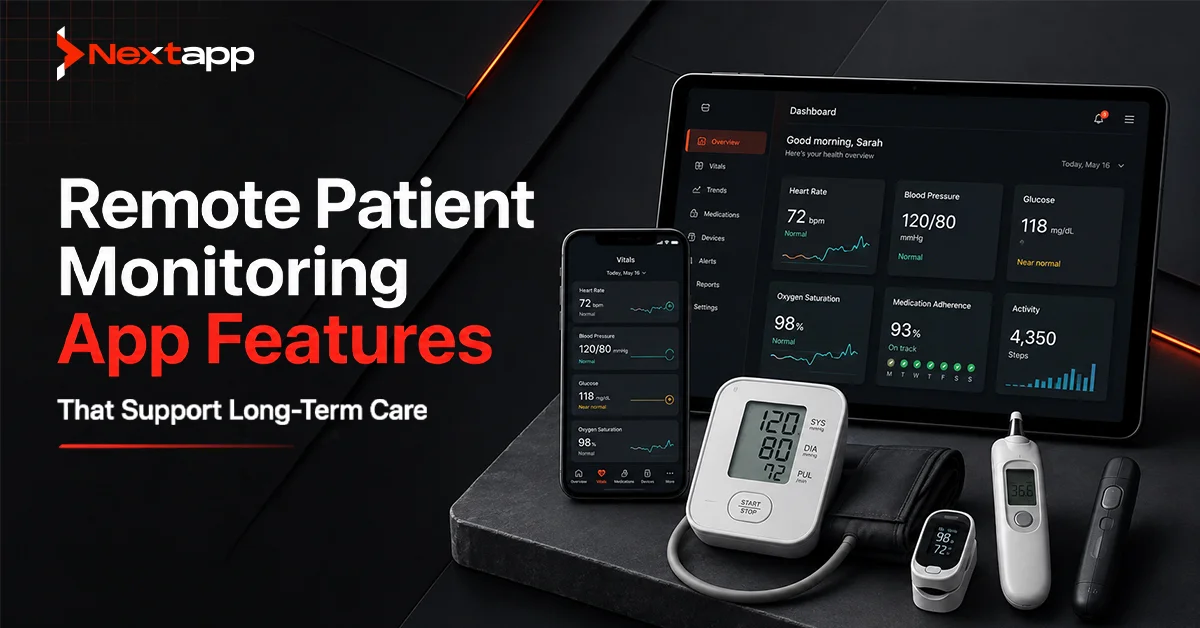
Remote patient monitoring begins with reliable data collection. In 2026, RPM apps must integrate seamlessly with FDA-cleared medical devices and wearables. These include devices that track blood pressure, glucose levels, oxygen saturation, heart rate, and weight.
Data accuracy and consistency matter more than volume. RPM apps must validate incoming data, handle device variability, and flag anomalies without overwhelming providers. When data pipelines are unreliable, trust breaks down quickly.
Equally important is secure data transmission. RPM apps handle sensitive health data continuously, making encryption and access control foundational requirements rather than optional enhancements.
Real-Time Monitoring and Intelligent Alerts
One of the most valuable RPM features is real-time monitoring combined with intelligent alerting. In 2026, healthcare organizations expect monitoring systems that surface meaningful signals instead of raw data streams.
Customizable alerts allow providers to define thresholds based on individual patient needs. This reduces alert fatigue while ensuring critical events receive attention. Intelligent alerting systems prioritize trends and deviations rather than isolated readings.
For patients, alerts provide timely guidance. Notifications may prompt medication adherence, symptom reporting, or follow-up actions. When alerts are relevant and actionable, engagement increases significantly.
Trend Analysis and Longitudinal Health Insights
RPM delivers value over time, not just in moments. Trend analysis allows providers to understand how a patient’s condition evolves across weeks or months. This supports proactive care planning rather than reactive interventions.
Healthcare apps must visualize trends clearly. Charts, summaries, and comparative views help clinicians assess progress quickly. For patients, simplified visualizations reinforce understanding and motivation.
Longitudinal insights also support population health initiatives. Aggregated, anonymized data helps organizations identify risk patterns and allocate resources more effectively.
Patient Engagement Features That Improve Adherence
RPM success depends heavily on patient participation. Without engagement, even the most advanced monitoring systems fail. In 2026, RPM apps must include features that encourage consistent use without creating a burden.
Symptom tracking allows patients to contextualize device data with how they feel. Medication reminders support adherence and reduce missed doses. Educational prompts help patients understand why monitoring matters.
Secure sharing features allow patients to view and share their data with caregivers or family members. This support network often plays a critical role in long-term care success.
Provider Dashboards and Clinical Workflow Support
RPM data is only useful if providers can act on it efficiently. In 2026, provider dashboards must consolidate patient data into actionable views. Clinicians should be able to identify at-risk patients quickly without sorting through noise.
Dashboards should support prioritization, filtering, and drill-down capabilities. Integration with existing clinical workflows reduces friction and improves adoption. When RPM feels disconnected, it adds workload instead of reducing it.
Documentation and reporting tools also matter. Providers need to capture RPM insights within clinical records without duplicating effort.
Reimbursement and Compliance Support for RPM Programs
RPM adoption in the US is closely tied to reimbursement. In 2026, healthcare apps supporting RPM must align with CMS guidelines and billing requirements. Automated reporting simplifies the documentation needed for reimbursement.
Time tracking, device usage logs, and interaction summaries help organizations meet compliance thresholds. Without these features, RPM programs struggle to scale sustainably.
Compliance considerations also extend to HIPAA requirements. Continuous data collection increases exposure risk, making strong security and audit controls essential.
Integration With EHR and Care Coordination Systems
RPM cannot operate in isolation. Integration with EHR systems ensures that monitoring data informs clinical decisions. When RPM insights remain siloed, their impact is limited.
FHIR-based integration enables structured data exchange and real-time updates. This supports care coordination across providers and settings.
Integration also supports telehealth workflows. Providers can review RPM data during virtual visits, improving context and decision-making.
Accessibility and Inclusivity in RPM App Design
RPM apps must work for diverse populations. In 2026, accessibility is both an ethical and practical requirement. Large text options, voice input, and multilingual support help ensure broader adoption.
Devices and apps should be easy to use for older adults and patients with limited technical experience. Simple onboarding, clear instructions, and responsive support reduce dropout rates.
When RPM apps are designed with inclusivity in mind, engagement improves, and outcomes follow.
Security Challenges Unique to Remote Monitoring
RPM introduces unique security challenges due to continuous data flow and device connectivity. Zero-trust principles help limit exposure by verifying every interaction.
Device authentication prevents unauthorized data injection. Secure offline handling ensures data remains protected even during connectivity interruptions.
Continuous monitoring and anomaly detection help identify suspicious behavior early. As cyber threats targeting healthcare grow, RPM security must evolve alongside features.
Measuring the Success of RPM Programs
Healthcare organizations need visibility into RPM effectiveness. Analytics dashboards should track engagement, outcomes, and operational metrics.
Key indicators include adherence rates, alert response times, and reductions in hospitalizations. These insights support optimization and justify ongoing investment.
When success metrics are clear, RPM transitions from experimental programs to core care infrastructure.
Why RPM Feature Strategy Determines Long-Term Impact
Remote patient monitoring is not just a technology investment. It is a care delivery strategy. In 2026, RPM success depends on thoughtful feature design, integration, and user experience.
When RPM apps are built around real clinical and patient needs, they improve outcomes and support sustainable care models. When built poorly, they create noise and frustration.
For healthcare organizations planning long-term care strategies, RPM feature planning is a foundational decision that shapes future growth.