

Key Takeaways
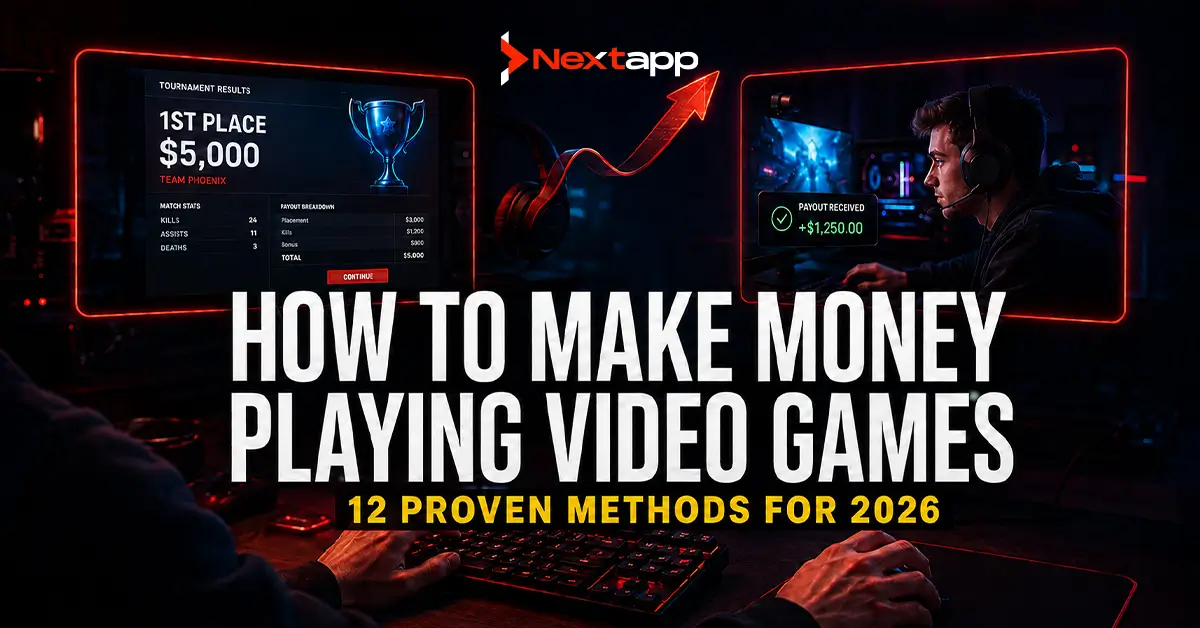
- Learning how to make money playing video games is genuinely possible in 2026 through 12 distinct and proven income paths.
- The global gaming creator economy is valued at $49.3 billion and is projected to reach $123 billion by 2030, growing at 25.7% CAGR.
- Streaming, esports, game testing, in-game trading, coaching, and affiliate marketing are the six highest-earning categories for gamers.
- Most successful earners combine two to three methods rather than relying on a single income source.
- Realistic earnings vary widely: reward apps pay $5 to $30 per month, professional streamers earn $2,000 to $20,000 per month, and top esports athletes earn six figures annually.
- Understanding mobile game monetization from a developer’s perspective helps players identify which platforms offer sustainable payout models.
- Sustainable gaming income takes 6 to 12 months to materialize. Success requires choosing a method aligned with your strengths and executing consistently.
Introduction
The idea of getting paid to play video games was a fantasy a decade ago. In 2026, it is a fully documented income category with millions of earners globally. The question is no longer whether you can make money playing video games but which of the 12 proven methods fits your skills, your schedule, and your financial goals.
The numbers confirm the scale of this opportunity. The global gaming creator economy reached $49.3 billion in revenue in 2025 and is on track to hit $123 billion by 2030. Mobile gaming alone generates $126.1 billion annually with 3.58 billion active players worldwide. Mobile game monetization statistics from 2025 show that in-app advertising and in-app purchases together account for over 60% of casual and mid-core game revenue, creating the financial infrastructure that pays streamers, testers, affiliates, and competitive players.
This guide covers all 12 methods in full, with realistic income ranges, platform recommendations, and what each path actually requires. Whether you are a high-skill competitive player, a content creator, or someone looking for low-effort side income, at least one of these paths fits your profile.
Method 1: Streaming on Twitch, YouTube, and Kick
Streaming is the most visible path for making money playing video games. Platforms like Twitch, YouTube Gaming, and Kick pay streamers through ad revenue, channel subscriptions, viewer donations (known as bits or Super Chats), and platform partnership bonuses.
Twitch Partners earn 50% of subscription revenue at $2.50 per subscriber per month. Affiliates earn the same rate after meeting viewer thresholds. YouTube monetization requires 1,000 subscribers and 4,000 watch hours, after which ad revenue in mobile gaming and video content pays $2 to $8 per 1,000 views, depending on the niche. Top streamers earn $2,000 to $20,000 monthly from combined sources. Most new streamers earn under $200 in their first six months.
The path to meaningful streaming income requires consistent output (5 to 7 sessions per week), a defined content niche, and genuine entertainment or educational value. Camera-shy creators do better on YouTube with edited video content than with live streaming. Personality-forward creators perform better on Twitch and Kick, where community interaction drives subscriptions.
Method 2: YouTube Gaming Content and Short-Form Video
YouTube gaming content covers tutorials, walkthroughs, tier lists, reviews, and commentary videos that rank in search and accumulate views over time. Unlike streaming, YouTube content earns passively after upload. A tutorial video that ranks for a competitive search query can generate income for years.
Short-form video on TikTok, YouTube Shorts, and Instagram Reels has created a new entry point for gaming creators. A single viral clip can generate tens of thousands of followers in days. Short-form creators monetize through platform creator funds, brand partnerships, and audience conversion to longer-form or streaming content. TikTok’s Creator Rewards Program pays $0.40 to $1.00 per 1,000 qualifying views for videos over one minute.
Understanding mobile game monetization trends helps content creators identify which games sponsors are most likely to pay for promotion. Games with large advertising budgets are actively seeking creators to feature their titles, creating direct sponsorship opportunities covered under Method 5.
Method 3: Esports Competitions and Tournament Play
Esports is the highest-earning path for elite mechanical skill. Prize pools for major titles reach into the millions: Dota 2’s The International has paid out over $40 million in single-year prize pools. Fortnite, CS2, Valorant, League of Legends, and Mobile Legends Bang Bang all run structured competitive circuits with regional and global tournaments.
Realistic entry points for competitive players include open-bracket tournaments on platforms like Battlefy and Challengermode, as well as game-specific rank ladders that feed into official circuits. Professional team contracts for established esports athletes pay $50,000 to $400,000 annually in base salary, with performance bonuses and sponsorship income on top.
Esports income is not exclusive to top-tier professionals. Semi-professional players compete in regional circuits earning $500 to $5,000 per month. Gaming coaches earn $20 to $150 per hour teaching mechanical skills and game strategy on platforms like Gamer Sensei and Fiverr. Coaching is one of the most accessible competitive income paths because it rewards game knowledge rather than peak mechanical performance.
Method 4: Game Testing and Quality Assurance
Game developers pay players to test builds before launch. This method requires no streaming setup, no competitive ranking, and no audience. A game tester identifies bugs, evaluates gameplay feel, and provides structured feedback that development teams use to improve the product before release.
Entry-level game testing roles pay $15 to $25 per hour in North America. Senior QA engineers in professional studios earn $45,000 to $80,000 annually. Freelance game testing gigs are available through platforms like PlaytestCloud and Testbirds, as well as through direct outreach to indie developers on itch.io and game development forums.
For players interested in how games are built, game testing is also an educational path into the industry. Understanding game development stages from the inside gives testers context for why specific feedback matters at different production phases. Testers who develop programming or design skills often transition into full development roles, with mobile game development services companies regularly hiring from their QA teams.
Method 5: Affiliate Marketing and Sponsorships
Gaming affiliate marketing pays commissions when audiences click referral links and complete purchases. Game publishers, hardware brands, VPN services, and gaming peripheral companies run affiliate programs paying 3% to 30% commission depending on product category. Amazon Associates, Razer affiliate program, and individual game publisher programs are the primary channels.
Sponsorships go a step further, paying creators directly for featuring products in content. Mid-tier gaming YouTubers with 50,000 to 200,000 subscribers earn $500 to $3,000 per sponsored video. Twitch streamers with 1,000 to 5,000 average viewers earn $500 to $2,000 per month from a dedicated gaming peripheral or software sponsor.
Understanding the most profitable mobile game monetization strategy from a developer’s perspective reveals why mobile game publishers are among the most aggressive affiliate program operators. Games using mobile app monetization platforms need a continuous stream of new installs to optimize their advertising revenue. Creators who promote these games receive payment per install (CPI deals), often earning $2 to $6 per qualified new player driven through their affiliate link.
Method 6: In-Game Item Trading and Marketplace Sales
In-game economies create real money opportunities for dedicated players. CS2 weapon skins trade on the Steam Community Marketplace and third-party platforms for prices ranging from $0.10 for common items to over $100,000 for rare StatTrak knives. Diablo 4, Path of Exile, and various MMORPGs have active player-to-player trading ecosystems where rare items sell for meaningful cash.
Account boosting and leveling services are another dimension of this method. High-ranked accounts in games like League of Legends, Valorant, and Overwatch sell on marketplaces for $50 to $500, depending on rank and skins owned. Platforms including PlayerAuctions, G2G, and game-specific Discord communities facilitate these trades.
Players should verify each game’s Terms of Service before engaging in item trading. Some games prohibit real-money account sales and may ban accounts found in violation. CS2 skin trading is explicitly permitted under Valve’s platform policies, making it the clearest-cut trading opportunity in the Western market.
Method 7: Game Coaching and Skill Instruction
The coaching economy within gaming has matured into a structured service industry. Platforms like Gamer Sensei, ProGuides, and Metafy connect players with coaches charging $20 to $200 per hour across all major titles. Coaches at the Diamond and above rank in competitive titles can build fully booked schedules within 60 to 90 days of listing their services.
Coaching content extends beyond one-on-one sessions. Coaches who package their knowledge into video courses earn passive income through Teachable, Gumroad, and YouTube membership programs. A well-structured course on a competitive game mechanic (such as jungle pathing in League of Legends or IGL calling in Valorant) can generate $1,000 to $10,000 in first-month launch revenue.
Method 8: Game Writing, Journalism, and Content Strategy
Gaming publications, developer blogs, and gaming websites pay freelance writers $0.05 to $0.25 per word for articles, reviews, and guides. Established gaming outlets, including IGN, Kotaku, PC Gamer, and dozens of independent gaming blogs accept freelance pitches. Game developers also hire content strategists to write in-game text, tutorial copy, and store page descriptions.
SEO-focused game guides rank on Google and earn advertising revenue indefinitely. A walkthrough or tier list article that ranks on page one for a competitive search term earns $100 to $1,000 per month in display advertising, depending on traffic volume and topic monetization rate.
Method 9: Game Development and Publishing Your Own Games
The most scalable how to make money playing video games path is transitioning from player to developer. Building and publishing your own game converts gaming knowledge into business equity. A successful game on the App Store or Google Play generates revenue through mobile game monetization models, including in-app purchases, advertising, and subscriptions, indefinitely after launch.
Starting this path requires understanding what is game development, evaluating your mobile game development cost options, and learning how to make a game app from scratch. For those who prefer to outsource development while contributing concept and design, working with a mobile game development company provides access to full production teams without requiring programming skills.
Once a game is live, the best mobile game monetization for revenue strategy combines rewarded advertising with optional in-app purchases. Understanding ad revenue in mobile gaming economics helps developer-players build games that are genuinely profitable, not just passion projects.
Method 10: Gaming Reward Apps and Play-to-Earn Platforms
Reward apps pay players for trying new games, reaching milestones, and completing in-app challenges. Mistplay has paid out over $100 million to users since 2016. Freecash holds a 4.8 Trustpilot rating from over 250,000 verified reviews. JustPlay processes same-day PayPal cashouts and has grown to 25 million active players in 2026.
Realistic earnings from reward apps range from $5 to $30 per month for casual users spending 30 to 60 minutes daily. These platforms operate on an ad revenue in mobile gaming model: game developers pay the platform to promote their games, and the platform shares a small portion of that revenue with active players. Understanding this model helps players identify which apps are sustainable and which are not.
Play-to-earn blockchain games represent a higher-risk variation. Games like Gods Unchained allow skilled players to earn $200 to $500 monthly through tournament prizes and NFT card sales. The key distinction between legitimate P2E and speculative schemes is whether gameplay skill drives earnings or speculation does.
Method 11: Game Streaming on Mobile: Building a Creator Business
Mobile-first gaming content is one of the fastest-growing creator categories globally. Games like Mobile Legends: Bang Bang, Free Fire, PUBG Mobile, and Clash of Clans command enormous audiences in Southeast Asia, Latin America, and South Asia. Creators building content around these titles on YouTube and TikTok reach significantly larger potential audiences than PC-gaming-focused creators.
The infrastructure for mobile game creation is also lower-cost. A recent flagship smartphone, a USB microphone, and free editing software are sufficient to produce professional-quality short-form content. For creators wondering how to advertise your mobile games or how to build an audience around a specific title, mobile gaming content on short-form platforms provides the fastest audience growth rate available in the gaming creator space.
Method 12: Game Apps That Pay Real Cash Directly
A growing category of game apps that pay real money pays players directly for competing in skill-based tournaments. Solitaire Cube, Blackout Bingo, Skillz-platform games, and Triumph Arcade operate head-to-head and bracket tournament formats where entry fees fund prize pools.
These apps sit at the intersection of gaming and competitive earning. Skilled players who master a single title on these platforms earn $50 to $200 per month consistently. The mobile game monetization alternatives without ads tournament model used by these platforms creates a player-funded prize pool rather than advertiser-dependent revenue, making payouts more reliable for consistent competitors.
For a detailed analysis of which specific apps pay the most and how their payout structures work, see the companion guide on game apps that pay real money, which covers 15 verified platforms with tested payout data.
How to Choose the Right Method for You
Choosing the best method starts with an honest assessment of three variables: your skill level, your available time, and your income goal.
Players with elite mechanical skill should pursue esports tournaments and coaching. Players with personality and communication skills should invest in streaming and content creation. Players with programming or design interests should move toward game development and publishing. Players with limited time or no specific competitive advantage should start with reward apps and gradually build toward higher-earning methods as they identify their strengths.
The most effective strategy in 2026 is to combine one active method (streaming, competitive play, coaching) with one passive method (affiliate links, reward apps, published game revenue). This combination provides consistent monthly income from passive sources while the active method scales toward higher earnings over time.
Conclusion
The 12 methods covered in this guide represent the full legitimate landscape for how to make money playing video games in 2026. Every method is real, every income range is validated, and every path has a clear entry point for players at different skill and experience levels.
The players who succeed choose one or two methods aligned with their strengths, build consistently over 6 to 12 months, and treat gaming income as a business rather than a lottery. They understand mobile game monetization trends well enough to identify which platforms pay sustainably. They know that streaming, coaching, and development income all require the same foundational discipline: showing up consistently, delivering value, and iterating based on what works.
If your ambition extends beyond playing games into building them, working with an experienced mobile game development company is the fastest path from concept to revenue-generating product. NextApp Inc. delivers full-cycle mobile game development services for studios and entrepreneurs at every scale. Contact us to discuss your game idea today.
Frequently Asked Questions (FAQs)
Can you actually make money playing video games in 2026?
Yes. Thousands of players earn consistent income through streaming, esports, coaching, game testing, affiliate marketing, and gaming reward apps. The earning potential ranges from $5 per month for casual reward app users to six figures annually for professional esports athletes and established streaming creators.
How much can a beginner earn from gaming?
A beginner using reward apps earns $5 to $30 per month. A beginner streamer earns very little in the first 3 to 6 months before building an audience. A beginner game tester freelancing through platforms like PlaytestCloud earns $15 to $25 per hour. Beginners with coaching-eligible rank in competitive titles can charge $20 to $40 per hour immediately.
Is game testing a real job in 2026?
Yes. Game testing is a professional QA discipline within the game development industry. Entry-level testers earn $15 to $25 per hour freelancing. Full-time QA engineers at professional studios earn $45,000 to $80,000 annually. Understanding the game development stages that QA supports makes testers more effective and more hireable.
How do game developers make money from the games players earn from?
Game developers generate revenue through mobile game monetization models including in-app purchases, in-app advertising, and subscription fees. The developer pays reward platforms and streamers to drive installs and engagement, which generates advertising impressions and purchase events. Understanding this model helps players evaluate which platforms have sustainable economics.
What skills do I need to start making money from gaming?
Different methods require different skills. Streaming requires entertainment ability and consistency. Esports requires mechanical skill and competitive game knowledge. Coaching requires deep game knowledge and communication ability. Game testing requires structured analytical thinking. Affiliate marketing requires an existing or buildable audience. Development requires programming or design skills or the budget to hire a mobile game development company.